


Shopify's Fall '26 Edition includes 150+ updates, but not all of them work the same way for a store run from Israel. Some, like Hebrew right-to-left storefronts, are among the most important changes for Israeli brands in years. Others depend on Shopify Payments or Managed Markets, which aren't available to businesses based in Israel.
This guide is for Israeli store owners, ecommerce managers, and agencies. It sorts the Fall '26 updates into what you can use now, what to check in your own admin, and what mostly doesn't apply to an Israel-based store. If you want the full list of updates first, start with our overview: Shopify Editions Fall '26: The Main Updates and What to Do Before BFCM.
Short answer: For Israeli merchants, the most relevant Fall '26 updates are (1) support for launching a storefront in Hebrew and other right-to-left languages, (2) Translate & Adapt keeping translated content current, (3) WhatsApp marketing consent and automations, (4) Rollouts for scheduling sale events like 11.11 and Black Friday, and (5) the AI channel and Catalog tools. Features built on Shopify Payments, such as Shopify Protect and Shop Pay in AI agents, generally won't apply unless your business has an eligible entity in a supported country.
What applies to Israel-based stores
The table below is a practical starting point. Availability can depend on your plan, your business location, and gradual rollouts, so confirm each item in your own admin before you plan around it.
| Update | For an Israel-based store | What to do |
|---|---|---|
| Hebrew and other right-to-left storefronts | Relevant now | Audit your theme and checkout for RTL before launching |
| Translate & Adapt keeps translations current | Relevant now | Review bilingual content after every edit |
| WhatsApp marketing consent and automations | Check availability in your admin | Plan consent wording and recovery flows |
| Rollouts and scheduled catalog changes | Check availability in your admin | Use it for 11.11, Black Friday, and holiday sales |
| AI channels and Shopify Catalog | Check eligibility in your admin | Improve product data, policies, and FAQs |
| Sidekick, Canvas, admin refresh | Platform features, rolling out | Try them on low-risk tasks first |
| Shopify Protect, Shop Pay in agents, multi-currency payouts | Generally not, because they rely on Shopify Payments | Use your gateway's fraud tools, or check eligibility for a foreign entity |
| Managed Markets | Not available to Israel-based businesses | Handle duties, taxes, and international pricing another way |
Hebrew storefronts: the update Israeli brands have been waiting for
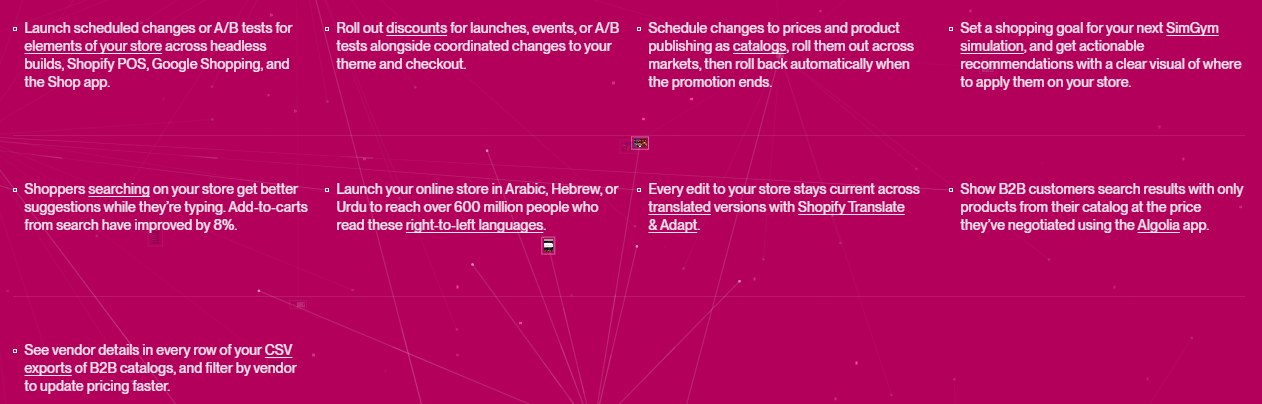
Shopify now lets merchants launch an online store in Arabic, Hebrew, or Urdu, which Shopify says reaches over 600 million people who read right-to-left languages. For Israeli brands, this changes the starting point. Until now, a Hebrew store usually meant a lot of custom theme work to get the layout to read correctly.
Platform support is the foundation, not the finish line. A Hebrew store still needs a theme and checkout that work from right to left in the details shoppers notice. Before launching, check:
- Layout direction: navigation, menus, product galleries, and carousels should open and move from right to left.
- Icons and arrows: "next" and "back" arrows, breadcrumbs, and sliders need to point the right way.
- Mixed text: Hebrew sentences that include English brand names, model numbers, or URLs often break word order. Test them on product pages and in the cart.
- Prices and numbers: shekel prices, discounts, and phone numbers should display clearly, without the symbol or minus sign jumping to the wrong side.
- Forms and checkout: field labels, error messages, and the order summary should align to the right and read naturally.
- Apps: reviews widgets, pop-ups, and chat bubbles are often the first things to break in RTL.
Agency insight: Test the Hebrew store on a real phone, not only a desktop preview. Most Israeli shoppers buy on mobile, and that's where RTL layout problems show up most.
Bilingual stores and Translate & Adapt
Many Israeli brands run a Hebrew store for local customers and an English one for international buyers. Shopify says every edit to your store now stays current across translated versions with Translate & Adapt. That should reduce outdated translations, but it doesn't replace a human review. Machine translation can still miss tone, sizing terms, and legal wording in policies, so review key pages in both languages after major updates.
WhatsApp marketing: a natural fit for Israeli shoppers
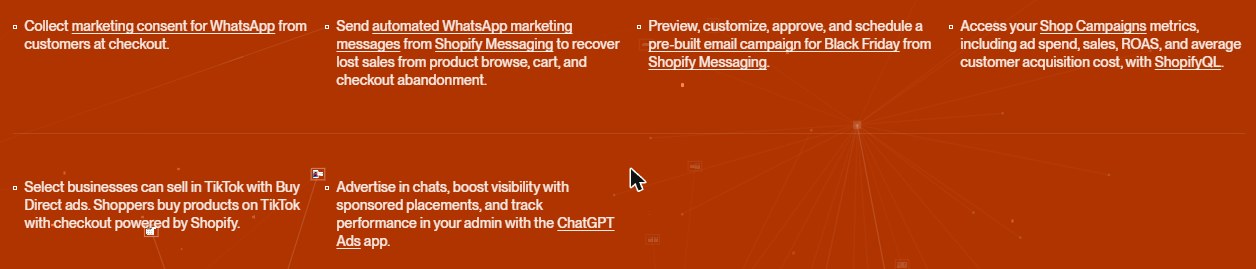
Fall '26 adds the ability to collect marketing consent for WhatsApp at checkout and to send automated WhatsApp messages through Shopify Messaging to recover browse, cart, and checkout abandonment. In Israel, where WhatsApp is the main messaging app for many people, this can be a strong recovery channel.
Two things to keep in mind:
- Consent comes first. Israel's anti-spam rules (section 30A of the Communications Law) generally require prior consent for marketing messages. Use clear opt-in wording, keep records, and make it easy to opt out. Check the details with your legal advisor.
- Don't over-message. A single, helpful cart reminder usually performs better than a sequence that feels pushy. Start with one message and measure before adding more.
Rollouts for Israel's sale calendar
The Israeli sale season is crowded: 11.11, Black Friday on November 27, Cyber Monday on November 30, and Hanukkah sales in early December. Rollouts let you schedule a launch or event that bundles theme, checkout, catalog, and discount changes together, and catalog scheduling can roll prices back automatically when a promotion ends.
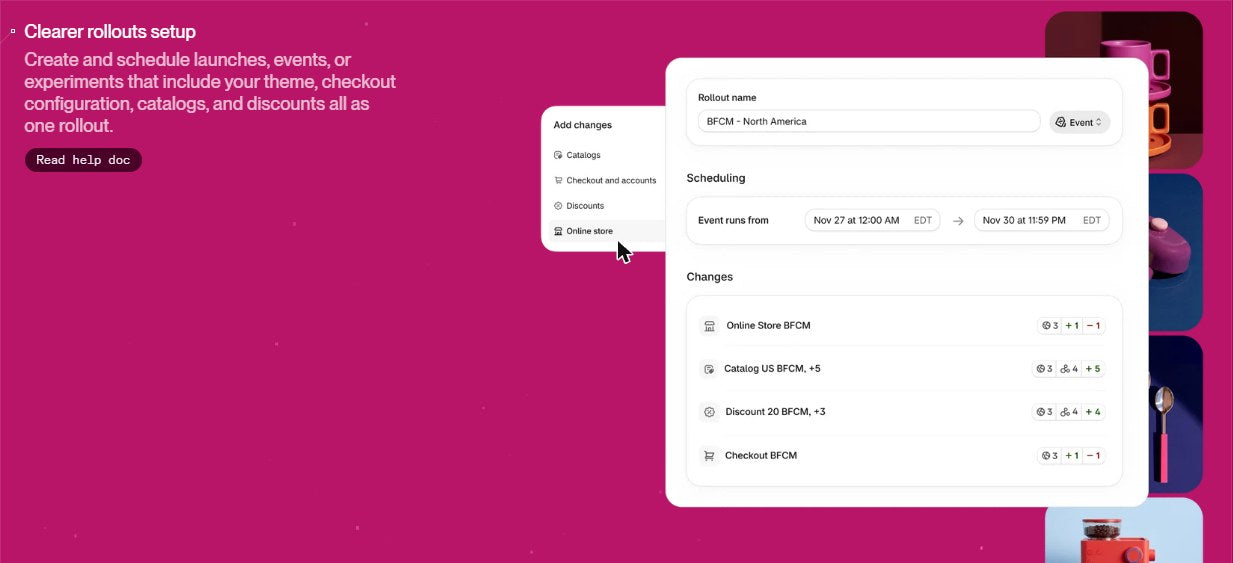
If Rollouts are available on your store, they're a safer way to run back-to-back sales than switching themes and prices manually at midnight. Plan each event as its own rollout, with its own end date.
AI channels and product data
Shopify is expanding where products can be discovered and bought inside AI assistants, including Google Search with AI Mode and the Gemini app, with checkout powered by Shopify. It also added a tool that shows whether your store is eligible for Shopify Catalog and what to change to qualify.

Availability of these channels can vary by country, so start with the Catalog eligibility check in your admin. Whatever the result, the preparation is the same and benefits every channel: clear product titles, complete descriptions and variants, accurate prices, and clear shipping and return policies. If you sell abroad, make sure your English product data is as complete as your Hebrew data.
Payments: what Israeli merchants should know
Many headline payments updates in Fall '26 are built on Shopify Payments, including Shopify Protect, Shop Pay in AI agents, multi-currency payouts, and the new chargeback protection. According to Shopify's list of supported countries, Shopify Payments isn't available to businesses based in Israel, so most Israeli stores use a third-party payment provider instead. Shopify's Managed Markets is also limited to merchants based in the continental United States and certain stores in Canada and the UK.
In practice, this means:
- Fraud protection: rely on your payment provider's fraud tools and on Shopify's built-in order risk analysis where it's available, rather than planning around Shopify Protect.
- Brands with a foreign entity: if your business also has a legal entity in a supported country, such as the US or UK, Fall '26 improves multi-entity payments. Check with your accountant how that fits your structure.
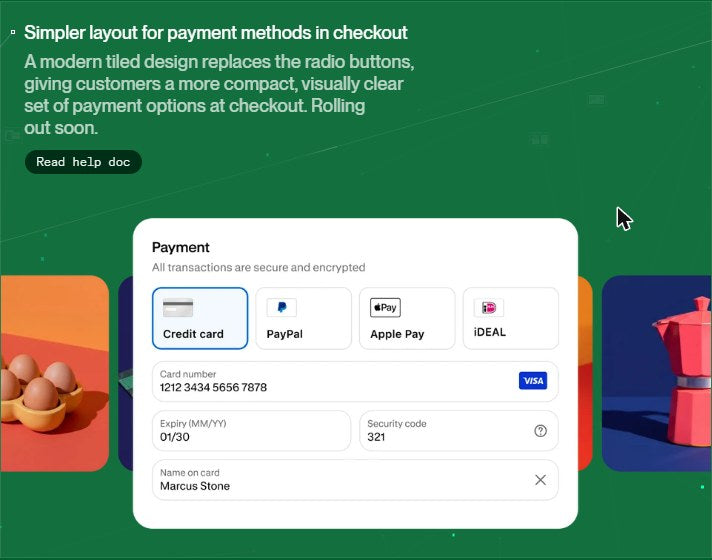
- Checkout design: some checkout updates, such as the tiled payment layout and the stacked checkout form, are about how checkout looks. How your local payment methods appear depends on your provider, so test checkout after each change.
Marketing reports and Sidekick
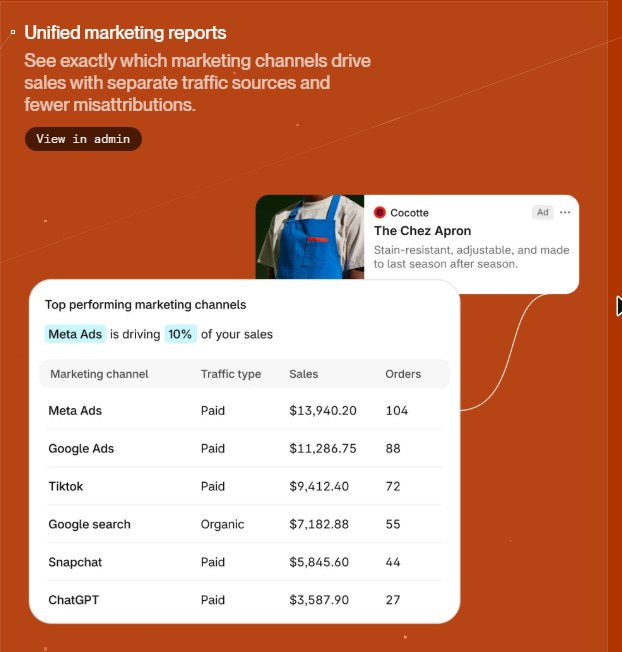
Israeli brands often spread their budget across Meta, Google, and TikTok. Fall '26 adds unified marketing reports that separate traffic sources and reduce misattribution, so it's easier to see which channel actually drives sales.
Sidekick, Shopify's AI assistant, can now plan several changes at once and apply them only after you approve. For bilingual stores, that's useful for bulk work such as updating descriptions across a collection, but review the plan carefully before approving. A change that looks right in English can break the Hebrew version of the same page.
Timing for Israeli stores
- Now, before 11.11 and Black Friday: run the Catalog eligibility check, tidy up product data and policies, and plan WhatsApp consent wording. These are low-risk changes.
- During the sale season: schedule promotions as rollouts if available, and watch checkout conversion and fraud daily.
- January: plan a Hebrew RTL launch or redesign, test checkout layout changes, and build WhatsApp recovery flows with a clean baseline to compare against.
Fall '26 checklist for Israeli merchants
- Confirm which Fall '26 features are available on your plan and store location.
- Run the Shopify Catalog eligibility check and fix what's missing.
- Audit your theme, apps, and checkout for right-to-left layout before launching in Hebrew.
- Review Hebrew and English versions of key pages after every major edit.
- Write clear WhatsApp opt-in wording and keep consent records.
- Plan 11.11, Black Friday, and Hanukkah promotions as separate scheduled events.
- Review fraud settings with your payment provider before the sale season.
- Test checkout with your local payment methods after any checkout change.
- Use unified marketing reports to compare Meta, Google, and TikTok performance.
FAQ
Is Shopify Payments available in Israel?
No. Israel isn't on Shopify's list of supported countries for Shopify Payments, so Israel-based stores typically use a third-party payment provider. Features that depend on Shopify Payments, such as Shopify Protect, generally don't apply.
Can I now build a Shopify store in Hebrew?
Yes. Fall '26 adds support for launching an online store in right-to-left languages, including Hebrew. You still need to check that your theme, apps, and checkout display correctly from right to left.
Can Israeli merchants use WhatsApp marketing in Shopify?
Fall '26 adds WhatsApp consent at checkout and automated WhatsApp messages through Shopify Messaging. Check availability in your admin, and make sure your consent process meets Israeli anti-spam rules.
Should I change my store before 11.11 and Black Friday?
Keep changes small before the sale season. Product data, policies, and scheduling are safe to work on now. Save bigger changes, such as a Hebrew redesign or checkout changes, for January.
Need help with Fall '26 for your Israeli store?
Dominatecom is a Shopify Select Partner based in Tel Aviv. We provide Shopify and Shopify Plus development, including Hebrew and bilingual storefronts, alongside UX/UI design and CRO. Dominatecom is led by Yuval Tsabari, a UX designer who combines analytics and consumer psychology, so an RTL launch can be checked against the buying experience and your data, not only the code.
We work with merchants directly and, on a white-label basis, with agencies. Scope, timing, and support coverage are agreed as part of each engagement.
Talk to us about a Hebrew storefront and Fall '26 review →
Sources
- Shopify: Shopify Editions Fall '26
- Shopify Help Center: Supported countries for Shopify Payments
- Shopify Help Center: Managed Markets


